- In this step, you’ll be practicing at set times throughout the day.
- It also helps if you know your child’s natural rhythm for pooping and peeing. That way, you won’t have to wait endlessly for something to happen during potty training sessions. And you won’t be caught off guard by a little puddle on the floor as often.
- Did you know that most people tend to have bowel movements and urinate at roughly the same times each day? For example, there’s a good chance we’ll need to have a bowel movement 15 to 30 minutes after eating. And we’ll need to urinate when we wake up. That’s perfectly normal.
- There’s a good chance your little one also pees and poops at regular times. When potty training, it’s helpful to know those regular times. You can then pay extra attention to see if your little one needs to use the toilet before the diaper is completely full.
What can you do?
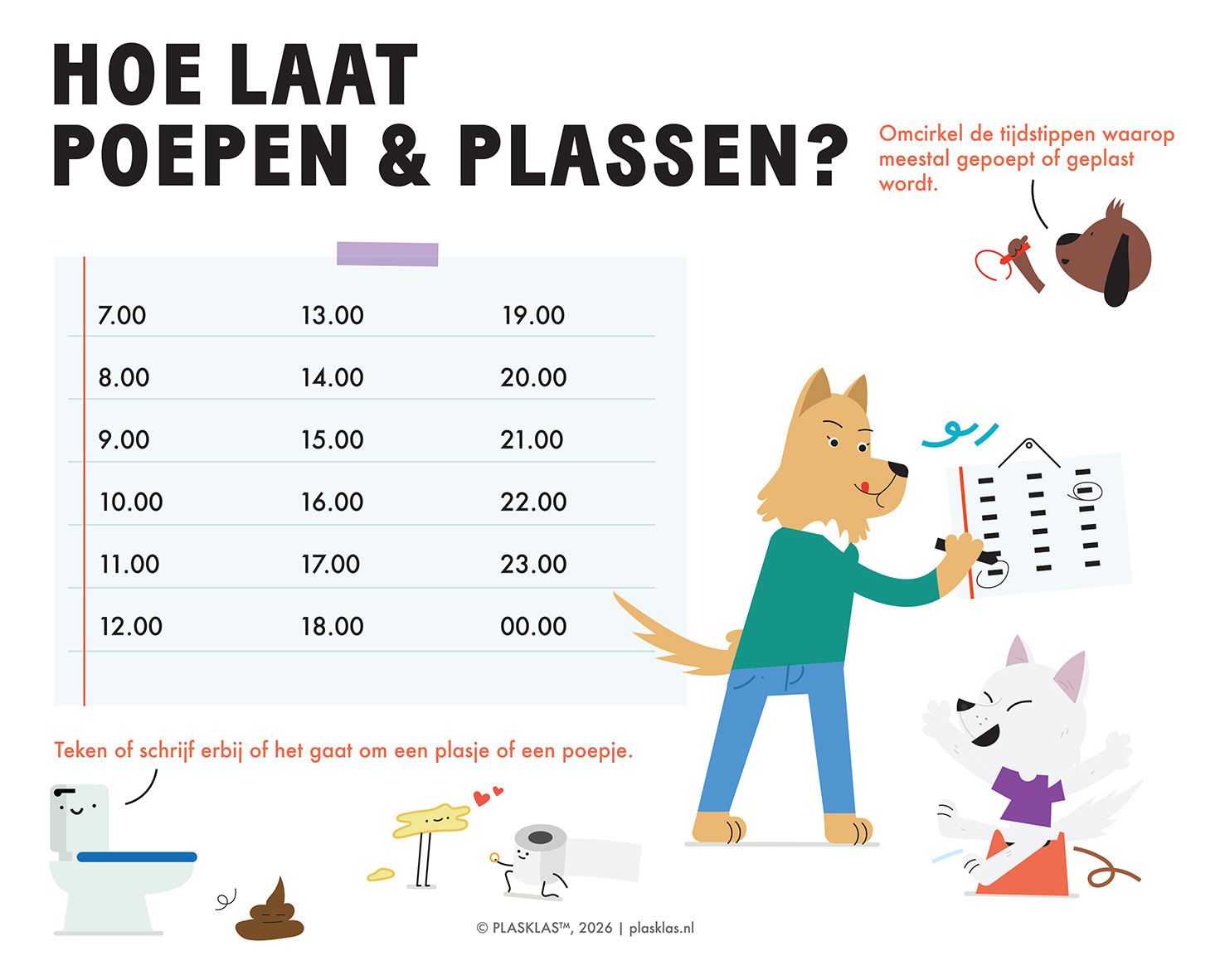
- Exercise. This training session includes a poster titled “When Does Your Baby Poop and Pee?” It helps you recognize when your baby is pooping and peeing—even if your baby is still wearing diapers sometimes.
- Hang the poster where you can see it clearly. For example, near the bathroom or in the living room.
- Keep a close eye on your child. Is your child going to the bathroom? Mark the time when it happens.
- Is your baby having a bowel movement? Mark the time it happens.
- Keep track of it for a few days.
- Does your baby have set times for peeing? And for pooping?
If you know your baby’s routine, it will help with the next steps. And you’ll get it right more and more often!


.svg)


.svg)